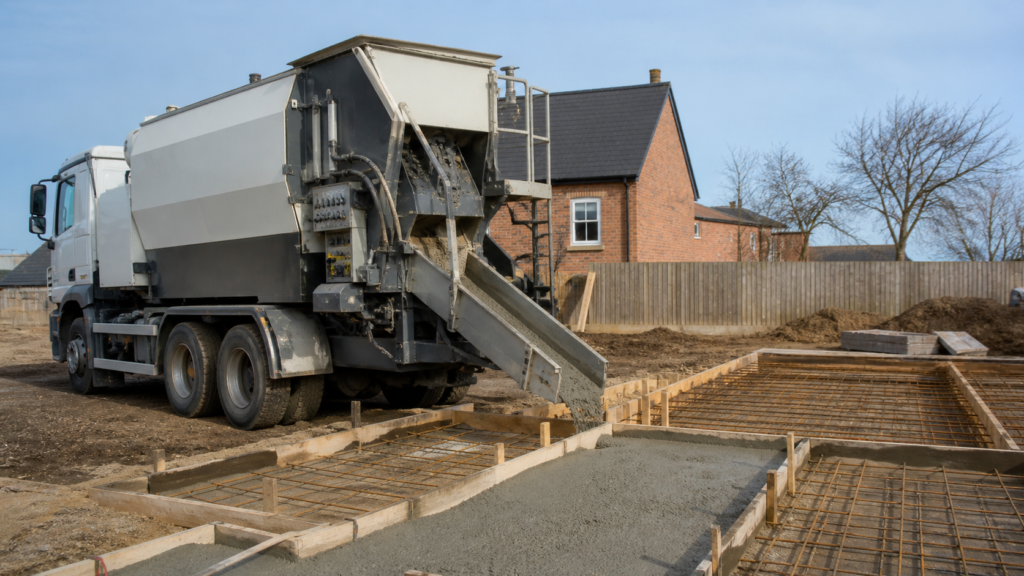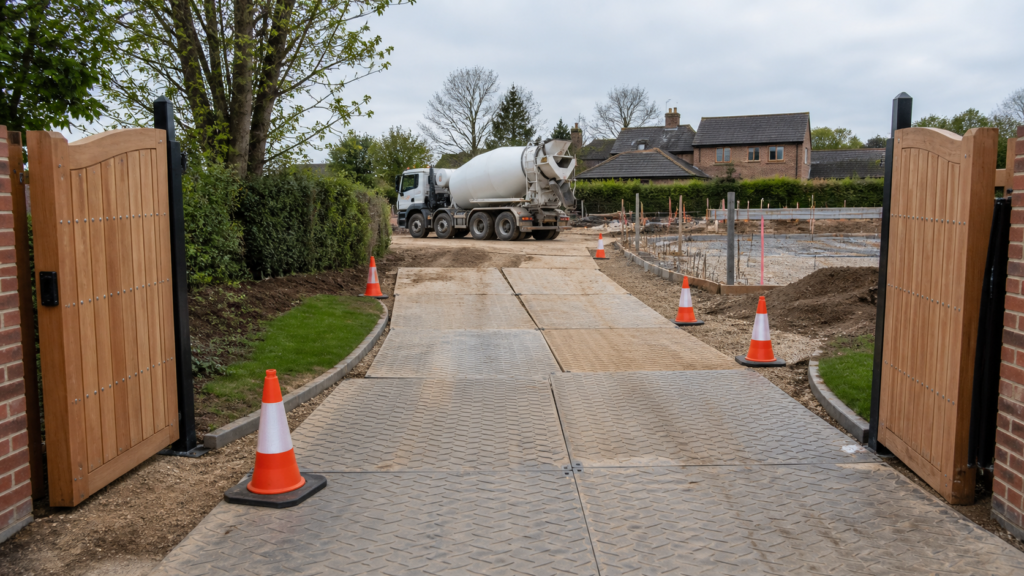
Short answer: before arranging concrete delivery, check vehicle access, gate width, road restrictions, overhead clearance, distance to the pour, ground conditions, washout arrangements and whether the concrete needs pumping.
Access problems are one of the easiest ways for a concrete delivery to become stressful. A good enquiry should tell the approved supplier how the vehicle will reach the site, where it can wait and how the concrete will get from the lorry to the pour.
Start at the road
Look at the road outside the site. Is there space for a lorry to approach, stop and leave safely? Are there parked cars, sharp bends, low branches, narrow lanes, weight restrictions or school-run timing issues that could affect the delivery?
Check the entrance and route
- Gate opening and any tight turns.
- Overhead cables, branches, scaffolding or porch canopies.
- Soft ground, kerbs, drains or weak surfaces on the route.
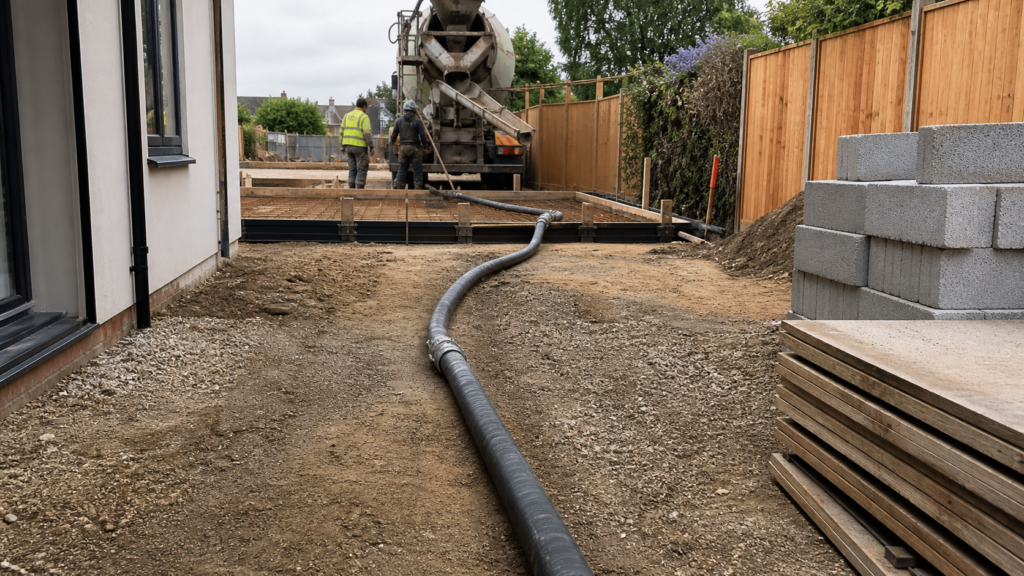
- Distance from the vehicle position to the pour area.
- Whether the route crosses finished paving, landscaping or public footpaths.
Decide whether pumping is needed
If the pour area is far from the lorry, around the back of a property, down steps or through a narrow side passage, concrete pumping may be the practical option. Pumping can reduce manual handling and help keep larger pours moving.
Tell the supplier what the site is like
Photos can help, especially for awkward access. Include the site address, project type, estimated volume, access route, parking notes and any time restrictions when you enquire. The approved supplier can then confirm what is possible before the delivery is booked.
Kent Readymix covers enquiries across Kent service areas and passes each suitable enquiry to one approved supplier for follow-up.
Next step: Send the measurements, site access notes and preferred delivery window through the Kent Readymix contact page. Kent Readymix can pass the enquiry to one approved supplier, who will confirm the mix, volume, delivery window and any site-specific requirements before the order is finalised.
Why access notes improve the enquiry
Good access notes help the approved supplier understand the job before committing to a delivery plan. They also reduce back-and-forth, especially on smaller domestic sites where the lorry position, pump setup or barrow route can make a big difference to timing.
If the site is on a narrow lane, near a junction, inside a controlled parking area or close to a school or town centre, mention that early. It may affect the delivery window or the practical advice given before booking.
Photos worth taking
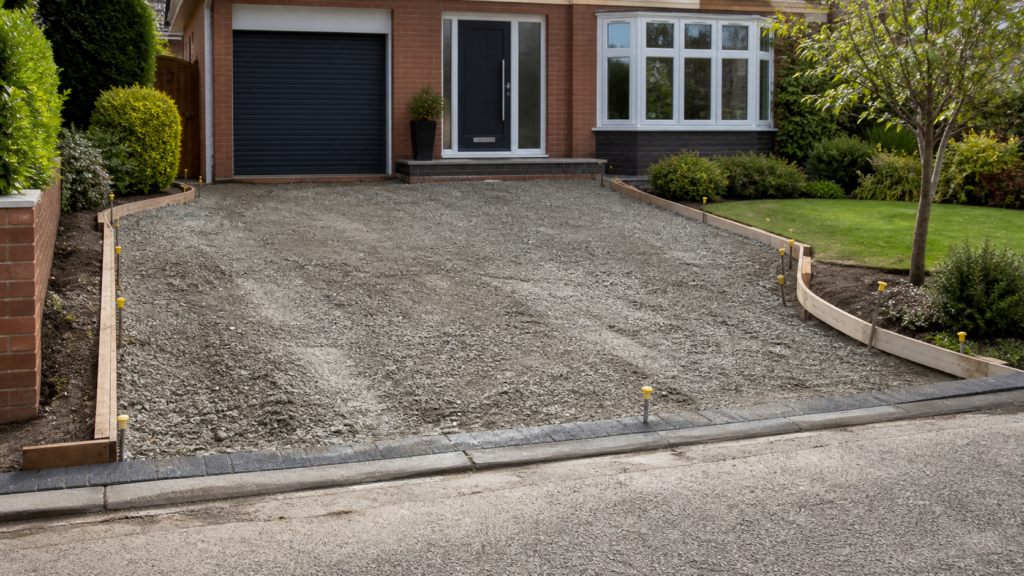
- The road approach from both directions.
- The entrance or gate with the opening visible.
- The route from the lorry position to the pour area.
- Any low branches, cables, steps or tight turns.
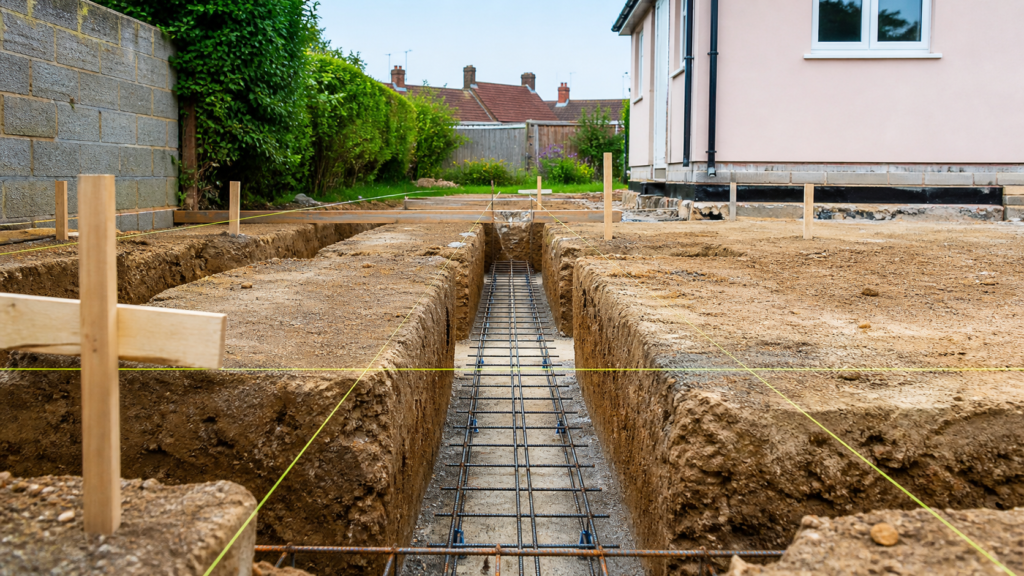
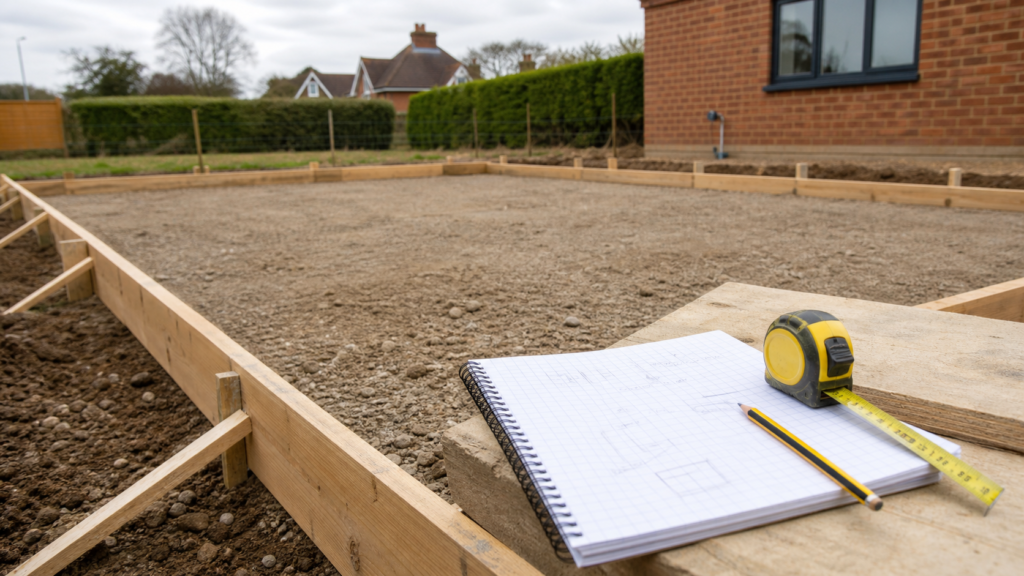
- The prepared formwork, trench or slab area.
Frequently asked questions
What access does a concrete lorry need?
It needs a safe route, enough space to stop and discharge, suitable ground, overhead clearance and an agreed way to reach the pour area.
What should I send with a concrete enquiry?
Send the address, project type, estimated volume, access notes, photos if useful and whether you expect direct discharge, barrowing or pumping.
When should I choose concrete pumping?
Consider pumping when the lorry cannot get close enough, when barrowing would be slow, or when the pour area is awkward to reach.