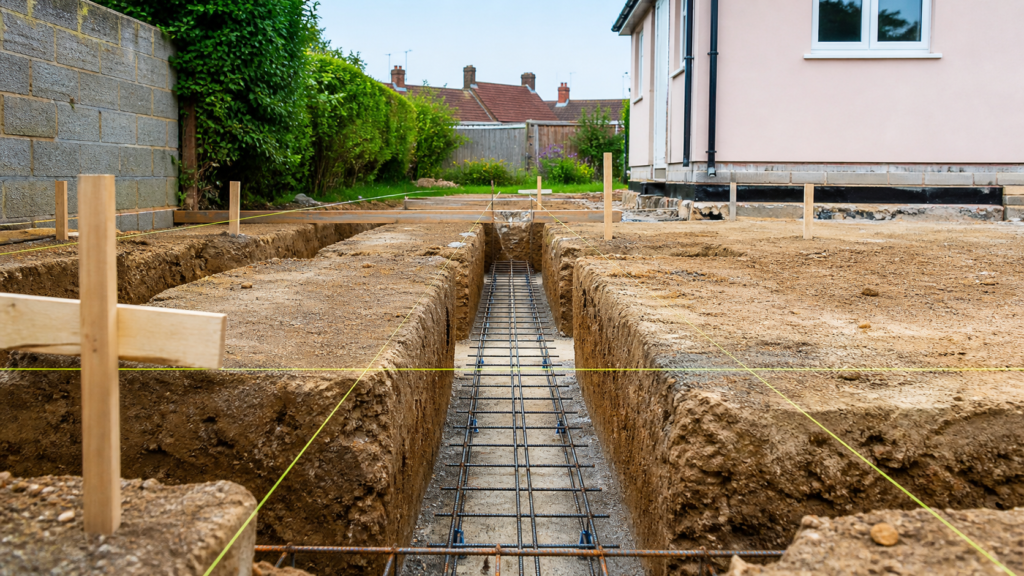
Short answer: before ordering concrete for footings or foundations, confirm the trench dimensions, required mix specification, inspection status, access route, discharge method and delivery timing. For structural work, the specification should come from building control, an engineer or the project designer where applicable.
Footings and foundations are not the place for guesswork. Once the trench is open, the job often becomes time-sensitive, especially if weather, inspections or site access are involved.
Confirm the specification first
The concrete mix should match the structural requirement and the exposure conditions. Domestic extensions, walls, columns and commercial bases may all need different specifications. If drawings, building control notes or engineer instructions exist, share them with the approved supplier before booking.
Kent Readymix is a lead-generation intermediary. It can arrange for your enquiry to be passed to one approved supplier, but the approved supplier must confirm the mix, availability and delivery details for your job.
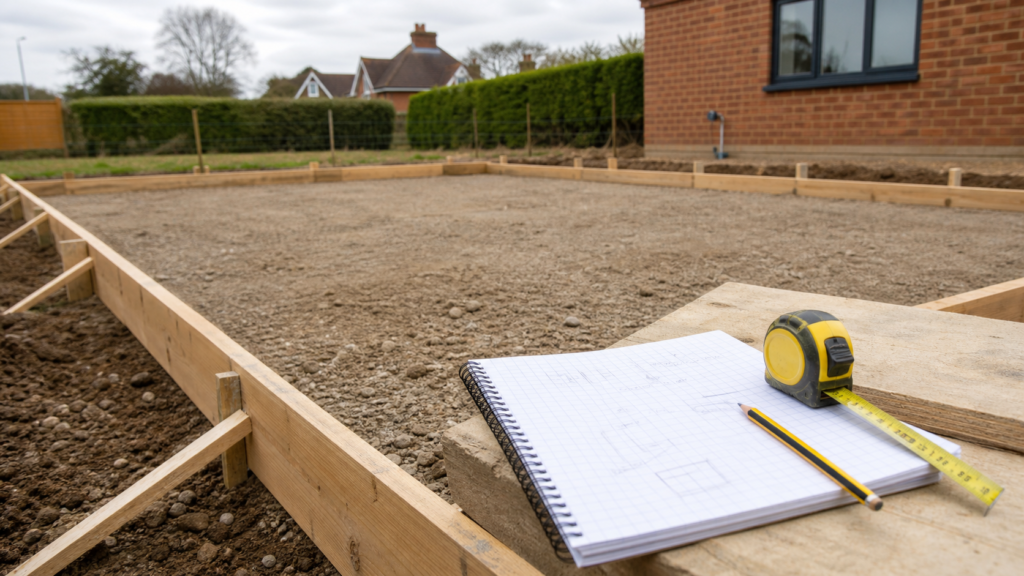
Measure the trench after excavation
Plan measurements are useful, but real trenches often vary. Check the actual depth, width and total run length after excavation. If the trench is irregular, use average measurements carefully and note any deeper sections.
Check inspection timing
If your project requires a building control or engineer inspection before pouring, do not book concrete until you know when that sign-off is likely to happen. A missed inspection can waste a delivery slot and disrupt the whole pour sequence.
Plan the discharge route
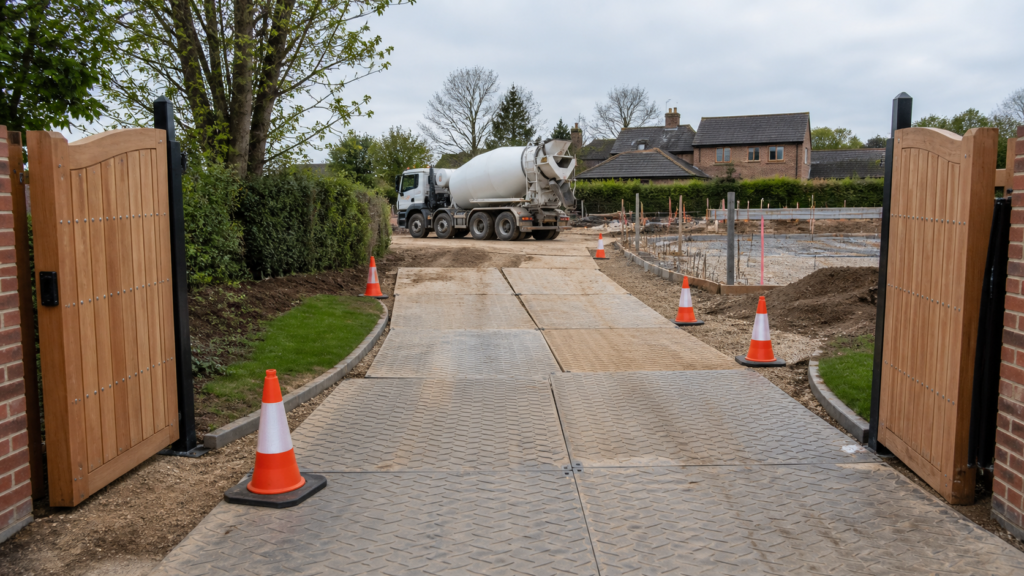
- Can the vehicle reach the pour area safely?
- Is there enough space for the lorry to wait and discharge?
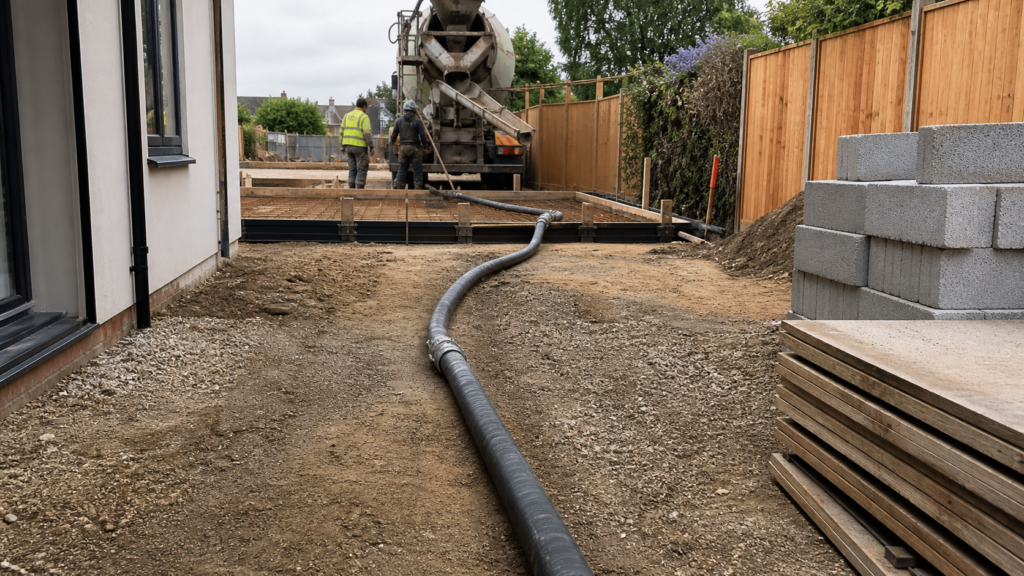
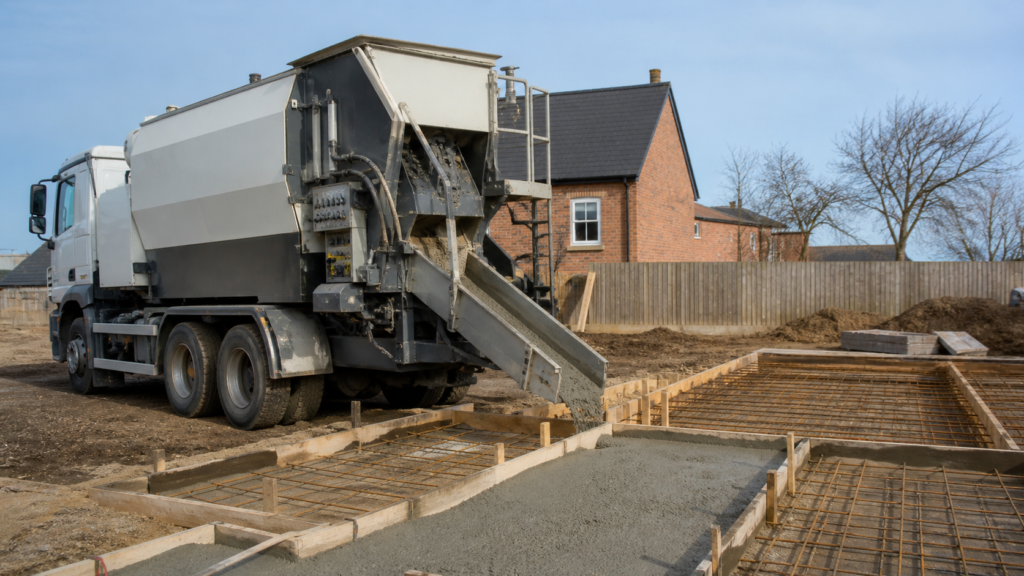
- Will concrete be placed directly, by chute, by barrow or by pump?
- Are there drains, kerbs, low branches, tight bends or overhead cables to mention?
- Is there a safe washout plan agreed with the supplier?
If direct discharge is not practical, concrete pumping may reduce labour and help keep the pour controlled.
Next step: Send the measurements, site access notes and preferred delivery window through the Kent Readymix contact page. Kent Readymix can pass the enquiry to one approved supplier, who will confirm the mix, volume, delivery window and any site-specific requirements before the order is finalised.
Information that helps avoid delays
Foundation pours often depend on several people being ready at the same time. The excavation must be prepared, any required inspection must be complete, the route must be clear and the team must be available to place the concrete. If one of those pieces is uncertain, say so before the delivery is confirmed.
Photos can be useful for footings because they show trench shape, access and nearby obstacles more clearly than a short description. Include any drawings or specification notes if they are available, especially where the work is structural or part of an extension.
After the pour is booked
Keep the site ready for the agreed window. Make sure trenches are not collapsing, water is managed, access is not blocked and the receiving team knows how the concrete will be placed. If anything changes before delivery, tell the approved supplier early.
Frequently asked questions
What concrete mix do I need for foundations?
The required mix depends on the design, ground conditions and specification. Use the drawings, engineer notes or building control requirements, then ask the approved supplier to confirm.
When should I order foundation concrete?
Order once the trench measurements, inspection timing, access and placement method are clear. Do not rely only on early plan dimensions.
Can concrete be pumped into foundation trenches?
Yes, pumping can be suitable where access is awkward or barrowing would be slow. The approved supplier can confirm availability and suitability.