

0+
Trusted Local Experts
Concrete Columns in Kent
Concrete for a column is specified by a structural engineer, never chosen on site, because the column carries load from everything above it. Kent Readymix supplies ready-mix concrete for columns across Kent and Medway to the designation, consistence and aggregate size on your drawings.
- 0%
Fixed Price Model
1-2-1
Personal Service
Local, reliable, fully insured
Why a column pour is different
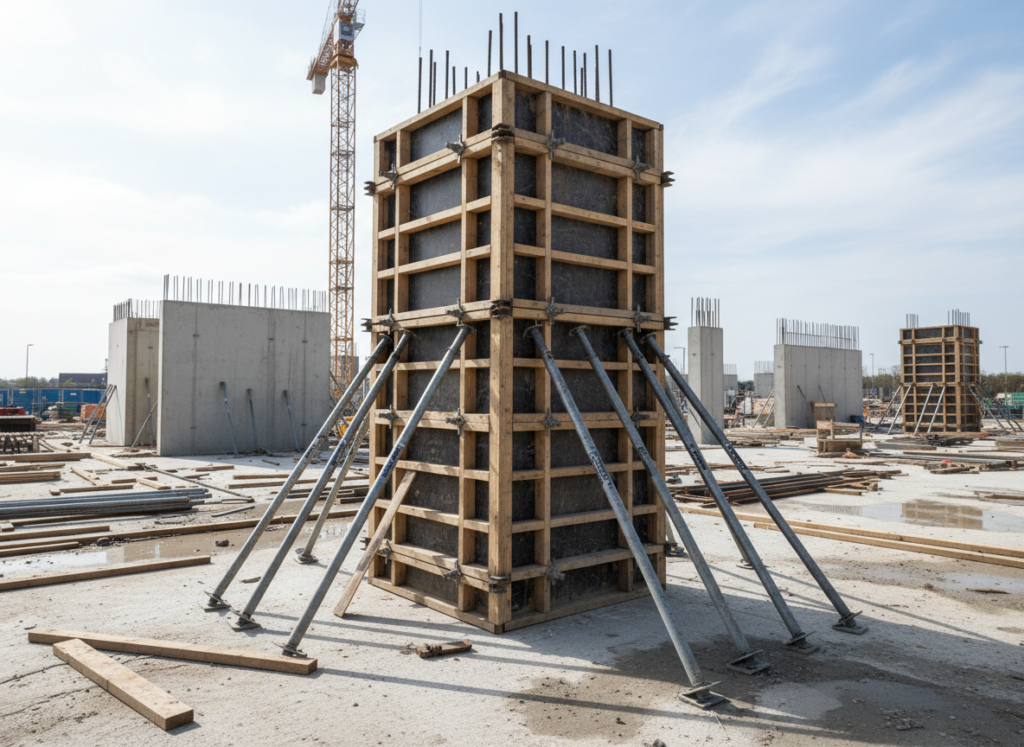
A column is a small volume of concrete doing a large structural job, poured vertically into tall, narrow formwork around a dense cage of reinforcement, and it is often the element everything else waits on. That creates three placing problems rather than strength problems: getting concrete down a confined space without it separating, getting it between closely spaced bars, and compacting it properly in a narrow space, all of which are solved when the concrete is ordered, not when it arrives.
Consistence and aggregate size
Two properties on the order matter as much as the strength class.
Consistence is how readily the concrete flows. Column concrete is normally supplied at a higher consistence class than a slab, so that it fills the formwork and surrounds the reinforcement without needing to be forced.
Maximum aggregate size decides whether it can get between the bars at all. Where reinforcement is congested, or the cover to the bars is small, a 10mm aggregate is specified instead of the usual 20mm. A 20mm mix poured into a tightly reinforced column arches over the bars and leaves voids behind them, which are only discovered when the formwork comes off.
Both are on your engineer’s specification. Both need to be on the order.
Formwork pressure and the rate of pour
Fresh concrete behaves like a heavy liquid, and the pressure it exerts on formwork rises with the height poured, the speed of pouring and the temperature. The reference document for calculating that pressure in the UK is CIRIA Report 108.
The practical point for the concrete order is this: the rate of pour is part of the formwork design, not a matter of convenience. Pouring a column faster than the formwork was designed for is how formwork fails. Agree the placing rate before the concrete is booked, and order a delivery pattern that supports it rather than one that forces the pace.
Placing and compacting
Concrete dropped from height into a tall column separates: the aggregate falls faster than the paste and lands in a heap at the bottom. Use a tremie, a trunk or a pump line so the concrete is delivered near the level it is being placed at.
Compact in layers with a poker vibrator, each layer worked into the one below so the two combine. Over-vibration is as damaging as under-vibration and drives the mix to segregate. The finished evidence of getting this wrong is honeycombing on the face of the column when it is struck, which is a repair at best and a structural question at worst.
Working out column volume
A rectangular column is width times depth times height. A column 300mm by 300mm and 3 metres tall is 0.3 x 0.3 x 3, so 0.27 cubic metres.
A circular column is pi times the radius squared, times the height. A 400mm diameter column 3 metres tall is 3.14 x 0.2 x 0.2 x 3, so roughly 0.38 cubic metres.
Columns come in sets, so multiply by the number being poured, then add for the starter kicker at the base of each one and for whatever stays in the pump line or the chute. Individual columns are small volumes and the losses are proportionally large.
Getting concrete to the column
Columns are usually poured at height, above the reach of any chute, which makes a concrete pump the normal answer. A boom pump places the concrete directly into the top of the formwork. A line pump with hose works where a boom cannot be set up.
The alternative on smaller jobs is a skip lifted by a crane or telehandler and discharged into the formwork. Whichever is used, it needs booking alongside the concrete so that both arrive together and neither waits for the other. Kent Readymix arranges the delivery around the placing method rather than the other way round.
Talk to us about a column pour
Send the designation, consistence class and maximum aggregate size from the specification, the column dimensions, how many you are pouring, the height and the placing method. Your quotation, delivery and payment are agreed directly with the approved supplier appointed to your pour.
Where any of those values is missing from the drawings, ask your engineer rather than us. We supply what the specification names and we will not substitute for it.
Work Out How Much You need
Concrete Volume Calculator
The concrete calculator needs JavaScript. Contact us and we will work out the volume with you.
What We Do
Common Concrete Columns Jobs We Handle
Structural columns for extensions and new builds
Garage and carport support columns
Agricultural building support columns
Balcony and canopy support columns
Engineered post bases for steel frames
Why book with us
Why Choose Us for Concrete Columns
One Batch, One Consistent Strength
Ready-mix concrete arrives already mixed to a single specification, so the whole pour goes in at one strength from one batch. Concrete mixed on site in a barrow mixer varies across the area and leaves a cold joint wherever one batch met the next.
You Describe the Pour Once
Set out what you are pouring, roughly how much, where a vehicle can stand and when you want it. That description goes to the approved supplier appointed to the job, rather than being repeated down a list of numbers.
The Mix Specified Before It Is Ordered
Concrete is ordered by designation under BS 8500, not by description. A shed base, a driveway and a structural slab take different mixes, and the designation is settled with your approved supplier in advance rather than argued about on the day.
Access Settled Before Delivery Day
How the concrete reaches the work is the question worth answering first: what can legally stand in the street, how far the chute reaches, and whether a pump or a smaller vehicle is the honest answer. Describe the access and it is planned rather than discovered.
Volume Planned Rather Than Guessed
Where a volume is genuinely uncertain until the ground is open, a volumetric mixer makes the concrete on site and most of our approved suppliers work on a pay-for-what-you-use basis. Where the figure is known, a standard load is usually the simpler answer.
Every Pour Type Across Kent and Medway
Slabs and floors, footings and foundations, driveways, columns and walls, volumetric and mini-mix loads, and pumping where a vehicle cannot reach the work. Domestic and commercial, across Kent and the Medway towns.
We’re Here To Help
Your Common Concrete Columns Questions Answered
Usually, yes, because columns are typically poured at height above the reach of a standard chute, which makes a pump the normal answer. On smaller jobs a skip lifted by a crane or telehandler is sometimes used instead. Tell us the column height and how many you are pouring, and Kent Readymix will arrange the delivery around the placing method that suits the job.
No, columns carry load from everything above them, so the designation, consistence and maximum aggregate size always need to come from a structural engineer’s drawing rather than being chosen on site. Kent Readymix supplies exactly what the specification names and will not substitute for it. Where any of those values is missing from the drawings, ask your engineer before ordering.
A line pump can often reach a tight site by running hose from a standing position some distance away, where a boom pump would need more room to deploy. Tell us about the space available, what is overhead and what is underground, and your approved supplier will confirm whether a boom, a line pump, or a crane and skip fits your site.
There is no fixed minimum, but individual columns are small volumes and losses to a pump line, a chute or a starter kicker are proportionally large on just one or two. Ordering columns as a set, where the design allows it, generally makes better use of a delivery than several separate small visits. Tell us how many you are pouring and when.
Yes, where the specification and the formwork allow it, several columns are commonly poured in one visit, one after another, from the same delivery. This is usually more efficient than booking separate deliveries for each one. Your approved supplier will plan the delivery pattern around how many columns you are pouring and how quickly the formwork can be worked through.
Not entirely: a quote reflects the designation, consistence, aggregate size and volume named on the specification at the time it is given, so it can change if the drawings are revised or the placing method changes. Your quotation, delivery and payment are agreed directly with the approved supplier appointed to your pour, and any revision to the specification should be sent to them straight away.
Local coverage, county-wide reach
Areas We Cover Across Kent
- Ashford
- Broadstairs
- Canterbury
- Chatham
- Dartford
- Deal
- Dover
- Faversham
- Folkestone
- Folkestone and Hythe
- Gillingham
- Gravesend
- Gravesham
- Herne Bay
- Hythe
- Maidstone
- Margate
- Medway
- Northfleet
- Paddock Wood
- Ramsgate
- Rochester
- Sevenoaks
- Sheerness
- Sittingbourne
- Snodland
- Swale
- Swanley
- Swanscombe
- Thanet
- Tonbridge
- Tonbridge and Malling
- Tunbridge Wells
- West Malling
- Westerham
- Whitstable
- Ashford
- Broadstairs
- Canterbury
- Chatham
- Dartford
- Deal
- Dover
- Faversham
- Folkestone
- Folkestone and Hythe
- Gillingham
- Gravesend
- Gravesham
- Herne Bay
- Hythe
- Maidstone
- Margate
- Medway
- Northfleet
- Paddock Wood
- Ramsgate
- Rochester
- Sevenoaks
- Sheerness
- Sittingbourne
- Snodland
- Swale
- Swanley
- Swanscombe
- Thanet
- Tonbridge
- Tonbridge and Malling
- Tunbridge Wells
- West Malling
- Westerham
- Whitstable